
Little Moments, Big Discoveries
- Unstructured play gives children opportunities to follow their curiosity and explore ideas independently.
- Everyday play can encourage creativity, problem-solving and decision-making without a fixed outcome.
- Interacting with other children helps preschoolers practise cooperation, communication and conflict resolution.
- A balanced Singapore preschool curriculum can combine purposeful learning experiences with time for exploration.
- Educators support development by providing safe environments and allowing children to learn through discovery.
Why Does Unstructured Time Matter in Early Childhood?
A preschooler’s day can be full of activities, from storytelling and counting games to art projects and group discussions. These experiences introduce important skills, but not every valuable learning moment needs a set of instructions or a specific result.
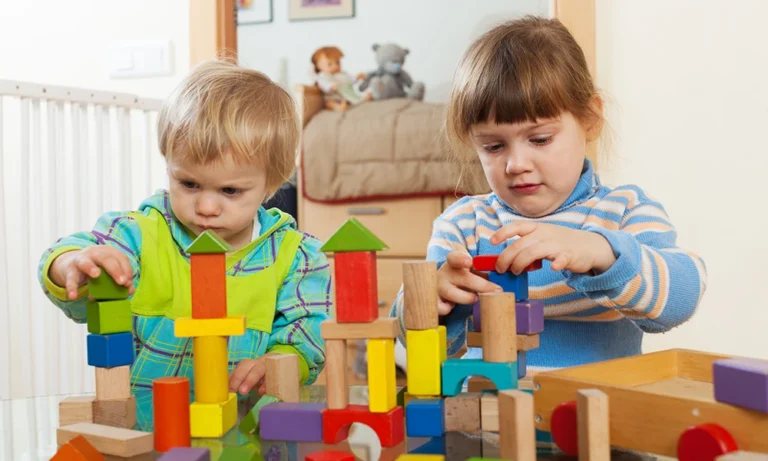
Imagine a child stacking wooden blocks, watching the tower fall and trying again with a wider base. Another child might spend several minutes deciding how to turn a cardboard box into a pretend bus. Neither activity necessarily follows a formal lesson plan, yet both offer opportunities to explore ideas, test possibilities and make decisions.
Unstructured time gives children room to decide what interests them and how they want to investigate it. Rather than following a predetermined sequence, they can experiment, change direction and learn from what happens. These small experiences help them develop a sense of agency as they discover that challenges can have more than one solution.
This does not mean that children should be left without guidance or that structured lessons are unnecessary. Young learners benefit from routines, thoughtful teaching and clear boundaries. The value lies in creating a healthy balance where children can practise specific skills while still having enough freedom to explore what captures their attention.
For families considering early education, understanding this balance can offer a useful perspective on what meaningful preschool learning looks like.
How Can Child-Led Play Build Confidence and Independence?
When children can choose an activity, they begin making decisions based on their interests. They might select a puzzle, arrange toy animals into a pretend farm or decide to draw a picture instead of joining a building activity. These choices allow them to practise expressing preferences and taking responsibility for what they do.
Small decisions can also build confidence. A child who works out how to connect two construction pieces or finds another way to complete a puzzle experiences the satisfaction of solving a problem independently. Even when an attempt fails, having the freedom to try again encourages persistence.
Unstructured play also creates opportunities for creativity. Without a single correct answer, children can imagine unusual uses for familiar objects, invent stories and combine ideas in unexpected ways. These experiences encourage flexible thinking rather than simply repeating instructions.
Adults still have an important role. Educators can prepare suitable materials, ensure the environment is safe and offer encouragement when a child needs support. Instead of immediately solving every problem, they might ask, “What else could you try?” or “What do you think would happen if you moved this block?”
Questions like these invite children to think through their choices. With patient guidance, unstructured moments can help them become more willing to explore, make decisions and learn from their own experiences.
What Do Children Learn When They Play Together Without a Script?
Unstructured play is not always a solitary activity. When preschoolers explore a shared space, they encounter situations that require communication, cooperation and negotiation.
Two children might want the same toy, disagree about how to build a pretend shop or have different ideas about the rules of a game. These moments can be challenging, but they also provide natural opportunities to practise social skills. Children begin learning how to express their needs, listen to others, wait for a turn and find solutions to disagreements.
They may also develop empathy by noticing how another child responds. If a classmate becomes upset because a construction project falls apart, a child might offer help or suggest rebuilding it together. Such interactions can help young learners recognise emotions and consider different perspectives.
A nurturing preschool in Singapore can support these experiences by creating a welcoming environment where children feel safe to participate, make mistakes and learn from one another. Educators can step in when support is needed, particularly if a disagreement becomes distressing or a child struggles to communicate.
The aim is not to expect preschoolers to resolve every situation independently. Rather, it is to give them appropriate opportunities to practise social skills with reassuring adult guidance.
These experiences can complement more structured group activities, helping children develop relationships and communication habits that are useful both inside and outside the classroom.
How Can a Singapore Preschool Curriculum Balance Structure and Freedom?
A thoughtful Singapore preschool curriculum can make room for both intentional teaching and open-ended exploration. Structured activities provide opportunities to introduce concepts, build foundational skills and guide children towards specific learning goals. Unstructured moments allow them to revisit ideas, experiment with materials and apply what they have discovered in their own ways.
For example, after a story about animals, children might participate in a guided discussion about the characters. Later, during free play, they could create an imaginary zoo, draw their favourite animals or invent a story of their own. The first activity introduces ideas with educator guidance, while the second allows children to explore those ideas creatively.
A balanced approach also recognises that children develop at different rates and may show their interests in different ways. One child might enjoy constructing elaborate structures, while another prefers pretend play or quiet exploration. Offering varied materials and opportunities gives children different ways to participate and demonstrate what they understand.
Parents can look beyond the number of scheduled activities when evaluating a preschool. Consider whether children have time to explore, whether educators respond thoughtfully to their interests and whether the environment encourages both independence and cooperation.
Little Seeds Preschool provides information about its early childhood education approach on its official website. Families can explore the school’s website to learn more about its learning environment and educational offerings when considering suitable preschool options.
Let Everyday Exploration Become Part of Growing Up
Children do not need every moment to produce a finished project or a measurable result. Sometimes, learning happens when they spend several minutes investigating a curious object, inventing a game with friends or trying a new solution after something goes wrong.
These experiences can support creativity, confidence, communication and problem-solving while giving children the freedom to discover what interests them. With safe spaces, thoughtful guidance and a balance of structured activities and open-ended play, preschool can offer meaningful growth opportunities.
Contact us at Little Seeds Preschool to learn more about the school’s early childhood learning environment and educational approach.