
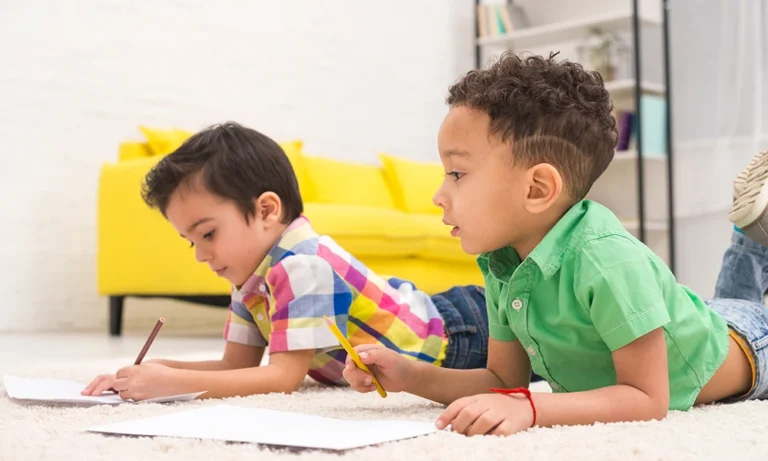
Walk into a Montessori classroom and you may see one child tracing sandpaper letters, another building words with a movable alphabet and a third reading a short book, all at the same time. That said,, for parents used to classes where everyone follows the same lesson, this can raise questions about fairness, progress and whether some children are being left behind. However, in a childcare Montessori setting, different learning paces are expected and planned for. Understanding how this works can help parents see what their child is experiencing each day.
Inside the Classroom
The way the room is organised makes individual pacing possible.
Lessons Are Given One-on-One or in Small Groups
Rather than teaching the whole class the same concept at once, Montessori teachers usually introduce materials to one child or a small group when they appear ready. A child who has mastered counting to ten may receive a new lesson on teen numbers, while a classmate continues practising with number rods.
Materials Are Sequenced by Difficulty
Montessori materials are generally arranged on shelves from simpler to more complex. Each one builds on skills learned from the last, so children move forward step by step without skipping important foundations.
Mistakes Are Built Into the Materials
Many materials are designed so children can see and correct their own errors, such as a cylinder that does not fit or a puzzle piece left over. This allows children to repeat an activity as many times as they need without waiting for an adult to check their work.
Among the Children
Mixed paces also shape how children relate to one another.
Mixed-Age Groups Encourage Peer Learning
Many classrooms combine children across a three-year age range. Younger children often learn by watching older classmates, while older children reinforce their own understanding by helping. Families comparing options for a preschool in Singapore may notice that this mixed-age structure is one of the clearest differences from more traditional programmes.
Comparison Is Less Visible
Because children work on different activities at different times, there are fewer obvious moments where one child is measured against another. Many children focus more on their own progress than on keeping up with peers.
Children Develop Unevenly Across Areas
A child may be advanced in language but still developing in mathematics, or confident with practical life tasks while hesitant in sensorial work. Individual pacing allows each area to progress at its own speed rather than holding a child back or pushing them ahead in everything at once.
Behind the Scenes
Teachers play an active role in making sure no child drifts without direction.
Close Observation
Teachers spend much of their time observing how children use materials, how long they concentrate and when they seem ready for something new. Notes taken over several weeks help reveal patterns that a single day might not show.
Detailed Record-Keeping
Most classrooms track which lessons each child has received, practised and mastered. These records help teachers plan next steps and spot areas where a child may need extra encouragement.
Gentle Invitations
When a child repeatedly avoids certain areas, teachers may invite them to try a related activity, link it to an interest or present a lesson alongside a friend.
What Parents Can Ask About
Parents who want a clearer picture of their child’s progress may find it useful to ask teachers about:
- Which materials their child is currently working with in each area.
- How the teacher decides when a child is ready for a new lesson.
- What support is offered if a child seems to be progressing slowly in one area.
Every Child on Their Own Path
Learning at different speeds is a central part of this approach rather than a problem to be fixed. Through sequenced materials, mixed-age groups and careful observation, children can build skills when they are ready, gaining understanding and independence that tends to last.
Visit Wharton Preschool to inquire about places in our mixed-age Montessori classes.